The book · the methods · the live labs
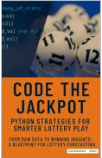
Code the Jackpot
A data-science approach to studying lottery draws. The book lays out the methods; these labs apply them to real public draw histories so you can see the analysis at work.
Educational analysis only — no tickets, no predictions sold, no affiliation with any operator.
The two analysis labs
EuroDrawPyLab
A data lab for the Eurojackpot 5/50 + 2/12 draw, applying the methods in Code the Jackpot.
TzokerPyLab
A data lab for the Greek Tzoker 5/45 + 1/20 draw, applying the methods in Code the Jackpot.
Why the labs build a reduced pool
Predicting the exact next draw is essentially impossible. If you've ever stared at a grid thinking "I cracked it this time"… yeah, same.
The brute-force way to raise your odds is simple: play a ton of lines every draw. But "a ton" quickly becomes tens of thousands, several times a week. Most people don't have the budget, the time, or the patience for that.
So the labs take the practical middle road: stop playing blindly. Each lab filters its full combination space — 5/50 for the Eurojackpot draw, 5/45 for the Greek Tzoker draw — into a reduced pool that matches healthier feature ranges, based on what real draws tend to look like.
What "playing blindly" looks like
Imagine a player decides to participate tonight. They fill a ticket with a few combinations. Simple, right?
- Did they check whether a combination has already appeared in the full draw history?
- Did they check whether it sits in feature zones that are rarely seen in real draws?
- Did they check whether they're picking from a tiny "crowded" corner of the space?
Most players never check, because it's tedious and they don't have the data ready. These labs do that homework once, then hand out combinations shaped by those rules.
The part that keeps this honest: public tracking
Since each lab went live, every real draw becomes a checkpoint. Anyone can look at the public logbook and judge how the approach behaves over time — wins, near-misses, and all.
If you want the full story, start with the book: Code the Jackpot. And if you play, keep it fun and sane: Responsible Gambling · Disclaimer.
Free, and deliberately anonymous
If you win with a line from a lab, it's yours. All of it. No split, no claim, no "send proof". There are no accounts and no tracking — the projects genuinely don't want to know who you are or what you won.
Each lab is a public experiment: reduced pool → packs → logbook. The logbook is the only feedback loop needed; it keeps the projects honest and grounded. If you'd like to support the work, the nicest way is simply to buy the book — see the support page. The labs stay free either way.